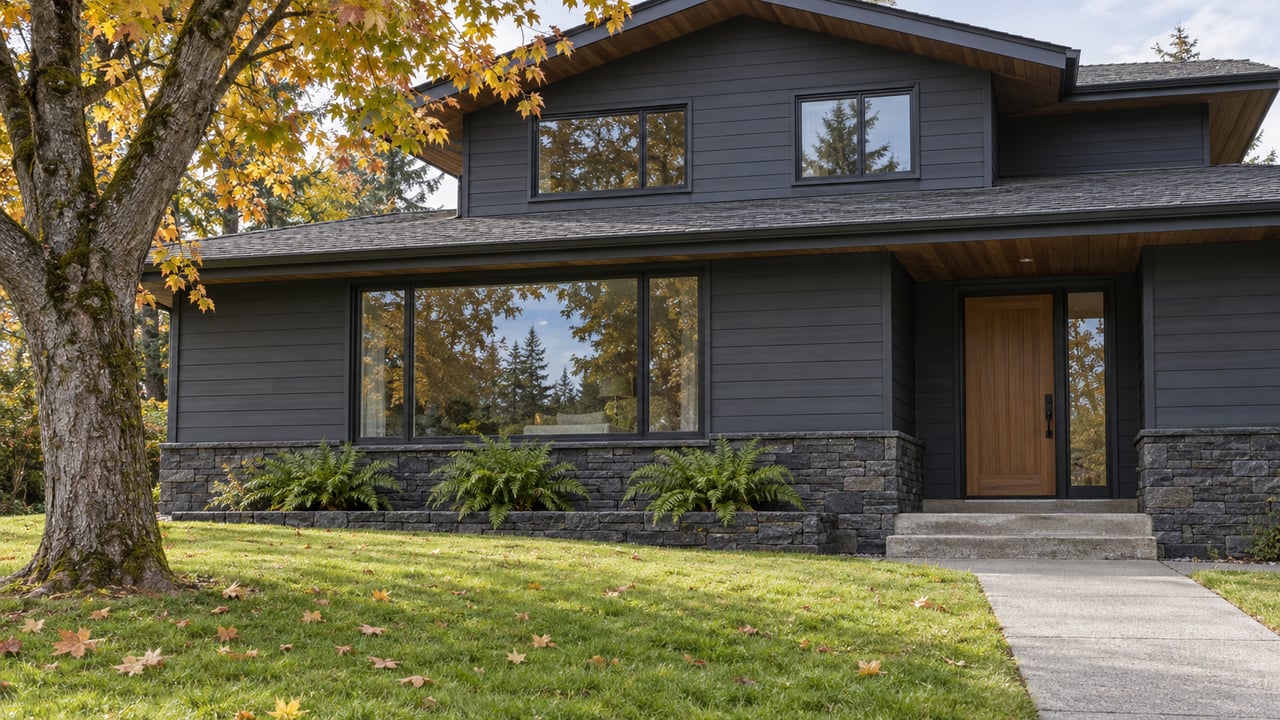
In Sammamish, How Many Walls Come Down Can Decide a Five-Figure Housing Fee
November 12, 2026
November 12, 2026
Picture a 2,100-square-foot house on a Sammamish lot and two sets of plans to turn it into a 2,700-square-foot home. Both plans end with the same square footage, the same lot and the same street. Under the city's rules in effect today, the first plan, an addition, owes no affordable housing fee at all. The second plan adds the same 600 square feet but also takes out more than half of the existing exterior walls during the remodel. The city treats that as a reconstruction, and the fee comes to $32,727.50.
That gap comes from Sammamish's Inclusionary Affordable Housing Program, Chapter 21.10 of the municipal code. The program has applied to new residential construction since January 1, 2025. The City Council approved its third version on Aug. 18, 2026, and Ordinance O2026-597 has been in effect since Aug. 29. For anyone looking at an older Sammamish house with plans to make it bigger, the rule changes the math. What decides the fee is how the work is classified, and the final size of the home matters less.
The program covers projects that create housing where none existed before. That means a new home on a vacant lot, new subdivisions, and multi-unit developments. A voluntary teardown and rebuild counts as new construction.
Additions and expansions to existing homes are exempt at any size. So are homes rebuilt or enlarged involuntarily, such as after storm or fire damage.
The point where a remodel turns into a teardown comes from the code's definition of demolition in SMC 21.04.040.B. For a residential building, demolition means removing more than 50 percent of the exterior walls. The city's own example applies that definition to an addition paired with a substantial remodel. Once more than half the exterior walls come out, the whole project is reviewed as a reconstruction, and the finished home is measured against the exemption threshold.
What gets measured also matters. The fee is based on finished residential floor area, measured from the exterior walls. That includes closets, halls, storage and utility rooms. Garages, unfinished attics, unfinished basements and upper-floor vaulted areas are excluded.
For projects that fall under the program, the code calls for 10 percent of new units to be affordable to households earning up to 80 percent of Area Median Income. One new house times 10 percent is a fraction of a unit. The owner can meet that fraction by designating the home as affordable or by paying a fee in lieu, currently $34.45 per square foot. Since August, the first 1,750 square feet of each home are exempt, and the fee applies only to finished area above that.
The city's affordable housing regulations page works through examples, and the spread between them is wide:
| Project, per the city's examples | Finished area | Fee in lieu |
|---|---|---|
| 1,200 sq ft addition to a 1,300 sq ft home | 2,500 sq ft | $0 |
| Garage and storage converted to 650 sq ft of living space | 3,000 sq ft | $0 |
| 4,500 sq ft home split internally into a duplex | 4,500 sq ft | $0 |
| Home rebuilt and enlarged after fire damage | 4,000 sq ft | $0 |
| Voluntary teardown of a 2,100 sq ft home, rebuilt larger | 2,500 sq ft | $25,837.50 |
| 600 sq ft addition plus removal of more than half the exterior walls | 2,700 sq ft | $32,727.50 |
| New home on a vacant lot with a 1,000 sq ft ADU | 3,000 sq ft primary | $43,062.50 |
| New home on a vacant lot | 4,000 sq ft | $77,512.50 |
In the ADU example, the 1,000-square-foot ADU is under the 1,750 threshold, so it adds nothing to the fee. Only the main house is charged.
The $34.45 figure makes more sense with its history. Sammamish Local News reported that the rate was developed with ARCH and its consultant to approximate the cost of one affordable unit in a ten-unit project. The original version exempted homes of 1,500 square feet or less and charged larger homes on their entire floor area. The same report says the fees go into a city-administered housing trust fund restricted to affordable housing. According to that report, Community Development Director David Pyle told the Council the fee was not mainly a revenue tool. Its purpose was to "disrupt land economics" by making smaller units more attractive to build than large ones.
Under whole-home charging, the fee was large. In a July 2026 article, Sammamish Local News reported a staff estimate of about $68,000 to $69,000 for a 2,000-square-foot home under the earlier calculation. Pyle also told the Council that home additions were the biggest pain point at the permit center, and that staff had seen applicants cancel permits once they saw the fee.
In August the Council adopted a motion from Councilmember Michael Boyer to charge only the square footage above 1,750. Pyle had recommended against that approach, saying it would dilute the program. The motion passed 5-2, and the Council kept the $34.45 rate. Councilmember Pam Stuart supported the structure in principle but voted no. Her reason was that the rate had been calculated for charging the whole home, and on the overage alone a 2,000-square-foot home owes just over $8,000. In her view, that is not enough to affect a builder's decision. In the Sammamish Local News account of the meeting, Mayor Josh Amato called the amendments "fixing something that went too far, too fast." He and Councilmember Kent Treen both said the Council can revisit the fee once it sees results.
As a result, the current fee hardly touches modest new homes, still adds five figures to large ones, and doesn't touch additions at all. The Council has said the rules could change again, so these numbers describe November 2026 and may not hold after that.
Here the rule starts to affect property value. Two older Sammamish houses with similar lots and similar list prices can carry very different costs to expand, depending on what each house can keep.
A buyer who plans to expand an older home is in a different position from one who plans to rebuild it. Expanding keeps more than half of the exterior walls, so no fee applies however large the addition gets. Rebuilding means paying $34.45 on every finished square foot above 1,750. On the 4,000-square-foot new-construction example in the table, that is $77,512.50. These details shape the number:
For sellers of older homes, this works in two directions. A house a builder would tear down carries the full fee on any large replacement, and a builder's offer will reflect that. A house solid enough to expand keeps the exemption, and for that buyer the condition of its walls is worth money.
O2026-597 is retroactive to Jan. 1, 2025. The city's release says some applicants who paid under the old rules may be eligible for a refund. A director's interpretation explains how that works. Applications submitted between Jan. 1, 2025 and Aug. 29, 2026 get the better of the earlier calculation or the new one, so the obligation stays the same or goes down.
Sammamish Local News reported that a staff slide put collections at about $100,000. Most applicants had deferred payment until final inspection, so for most projects the change removes a permit condition rather than producing a refund. If you're buying a home with an open permit from that period, the fee condition is one of the items to look at in the permit file.
Does an ADU on my existing lot trigger the fee? ADUs and cottage housing of 1,750 square feet or less are exempt under the city's list of exemptions.
Can a project designate the home as affordable instead of paying? The city lists that as one compliance option. Affordable ownership units generally must stay affordable for at least 50 years from initial owner occupancy.
Where do I check a specific project? The city directs questions about current or past permit applications to its Permit Center.
This post is general information about a city rule. It is not legal, tax or financial advice, so please confirm how the program applies to your property with the City of Sammamish and the right professional before you rely on it.
If you own an older Sammamish home, its value to the next buyer may depend as much on what they can do with it as on what it is today. I'm glad to walk through your home and lot with you and put a real number on it. Reach out to Tom Covello for a free home valuation and consultation.
Stay up to date on the latest trends in real estate.
What Effective Listing Marketing Looks Like in Bellevue, WA.
Furnishing a New Place With Ease in Bellevue, WA.
To raise the standard by providing my clients with honest answers, direction and a positive outlook. Through outstanding customer service and professional expertise, I will satisfy and exceed my clients expectations—this is my number one goal!