By Tom Covello
The Pacific Northwest has one of the most deeply rooted coffee cultures in the country, and Bellevue is no exception. Whether your morning starts with a pour-over, a pulled espresso shot, or a cold brew straight from the fridge, the right accessories make the difference between a functional counter setup and a coffee bar that you actually look forward to using every single day. Getting the foundation right does not require spending a fortune — it requires knowing what actually matters.
Key Takeaways
-
A quality burr grinder and an airtight bean storage system are the two most impactful upgrades for anyone brewing at home
-
The right brewing equipment depends on your method — espresso, pour-over, and French press each have their own non-negotiable tools
-
Organization and display choices shape how much you actually use and enjoy your coffee bar
-
A well-designed coffee bar adds genuine lifestyle value to a home and is increasingly a feature buyers in Bellevue notice
Start With the Grinder and Bean Storage
Fresh coffee starts with fresh grounds, and fresh grounds start with a burr grinder. This is the single most impactful piece of equipment a home coffee drinker can add to their setup, and it is consistently underestimated. Blade grinders chop beans unevenly, producing a mix of fine dust and coarse chunks that leads to inconsistent extraction — meaning some of your coffee over-extracts and turns bitter while the rest under-extracts and turns flat. A burr grinder, by contrast, produces uniform grounds at whatever size you dial in, which translates directly into a better cup regardless of your brewing method.
Pair the grinder with proper bean storage. Coffee beans are damaged by air, light, moisture, and heat — the four things that are in every kitchen in abundance. An airtight canister with a one-way valve, which lets CO2 escape without letting oxygen in, keeps beans fresh significantly longer than leaving them in the bag they came in. In the Pacific Northwest, where roasters like Olympia Coffee and Lighthouse Coffee source and roast with genuine care, protecting those beans from staling is worth the investment.
Grinder and Storage Essentials
-
Burr grinder — conical burr grinders are the most common choice for home use, offering consistent grind size at a range of price points
-
Airtight coffee canister with one-way valve — look for ceramic or opaque containers that block light as well as air
-
Coffee scale — measuring by weight rather than volume produces far more consistent results, especially for pour-over and espresso
-
Bean variety — keep two to three different roasts on hand to suit different times of day or brewing methods
Match Your Accessories to Your Brewing Method
The accessories that matter most depend entirely on how you brew. A pour-over setup has different requirements than an espresso bar, and trying to apply espresso logic to a French press setup — or vice versa — leads to cluttered counters and tools that never get used. Being clear about your primary brewing method before you start buying equipment saves both money and counter space.
For pour-over brewing, a gooseneck kettle with temperature control is the most important accessory after the grinder. Precise pour control and accurate water temperature are what separate a good pour-over from a flat one. For espresso, a tamper, a knock box for spent pucks, and a milk frothing pitcher are the tools that round out the setup after the machine itself. For French press, the method is forgiving enough that a good grinder and a standard kettle cover most of what you need.
Accessories by Brewing Method
-
Pour-over: gooseneck kettle with temperature settings, a flat or conical dripper, paper or reusable filters, and a precision scale
-
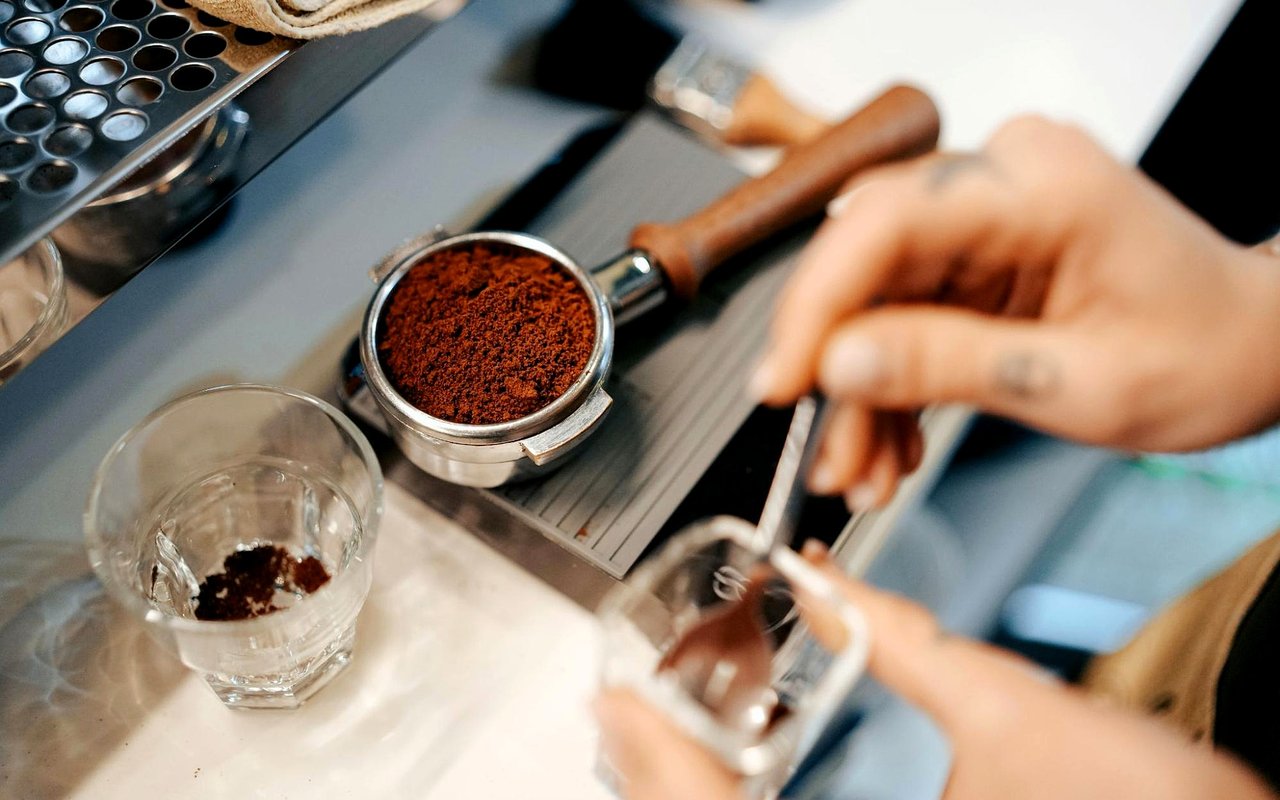
Espresso: a tamper sized to your portafilter, a knock box, a stainless milk frothing pitcher, and a WDT stirring tool for even grounds distribution
-
French press: a coarse-setting burr grinder, a standard kettle, and a timer — the method is forgiving but benefits from consistent steep time
-
Cold brew: a large-capacity mason jar or dedicated cold brew maker, a fine mesh filter, and patience — most cold brew steeps 12 to 24 hours
Design Your Coffee Bar for Daily Use
A coffee bar that looks good but requires reassembling itself every morning will stop being used within a week. The best home coffee setups in Bellevue homes are the ones organized so that every step in the brewing process flows naturally — beans, grinder, brewing device, and cup all within arm's reach in the order you use them.
Trays are one of the most useful organizational tools available. Grouping related items on a single tray — a tamper, WDT tool, and knock box for an espresso setup, for example — keeps the counter from looking chaotic and makes the process feel intentional rather than improvised.
Open shelving above the counter works well for mug display, which doubles as a visual anchor for the whole setup. A small lamp or under-cabinet lighting adds warmth and makes the space feel like somewhere you want to spend the first ten minutes of your morning.
Display and Organization Tips
-
Use a tray to group your active brewing tools — it contains visual clutter and makes the process feel cohesive
-
Display mugs on open hooks or a wall-mounted rack rather than storing them in a cabinet — it keeps them accessible and adds warmth to the setup
-
Store syrups, sweeteners, and add-ins in uniform glass bottles or small decanters rather than their original packaging
-
Keep a small plant or a simple piece of art nearby — the coffee bar is a daily ritual space and deserves to feel like one
FAQs
What is the single best upgrade for someone who already has a coffee maker?
A burr grinder, without question. Most home coffee drinkers already have a capable brewing device — what they are missing is consistent, freshly ground coffee. Switching from pre-ground or blade-ground beans to a burr grinder produces a noticeable improvement in flavor that no other single accessory can match.
How much counter space does a well-equipped coffee bar actually need?
A functional setup can fit in as little as two to three feet of counter space if it is organized intentionally. The key is vertical storage — wall-mounted mug hooks, open shelving above the counter, and slim canisters that stack or line up neatly. If counter space is tight, a small bar cart is a clean solution that keeps everything mobile and contained.
Does a home coffee bar add value to a home in Bellevue?
It is not a line item on an appraisal, but it is a feature that resonates with buyers in this market. Bellevue attracts a buyer profile that values thoughtful home design and functional lifestyle spaces. A well-executed coffee bar — built into a kitchen nook, a butler's pantry, or a dedicated counter section — reads as a quality-of-life detail that leaves a strong impression during showings.
Contact Tom Covello Today
A home that is designed for the way you actually live — including the small daily rituals that matter — is worth looking for carefully. Whether you are buying, selling, or thinking through what updates might make the biggest impact on your
Bellevue home, reach out to me,
Tom Covello, and let's talk through what makes sense for you.